The Role of Occupational Therapy in Special Education

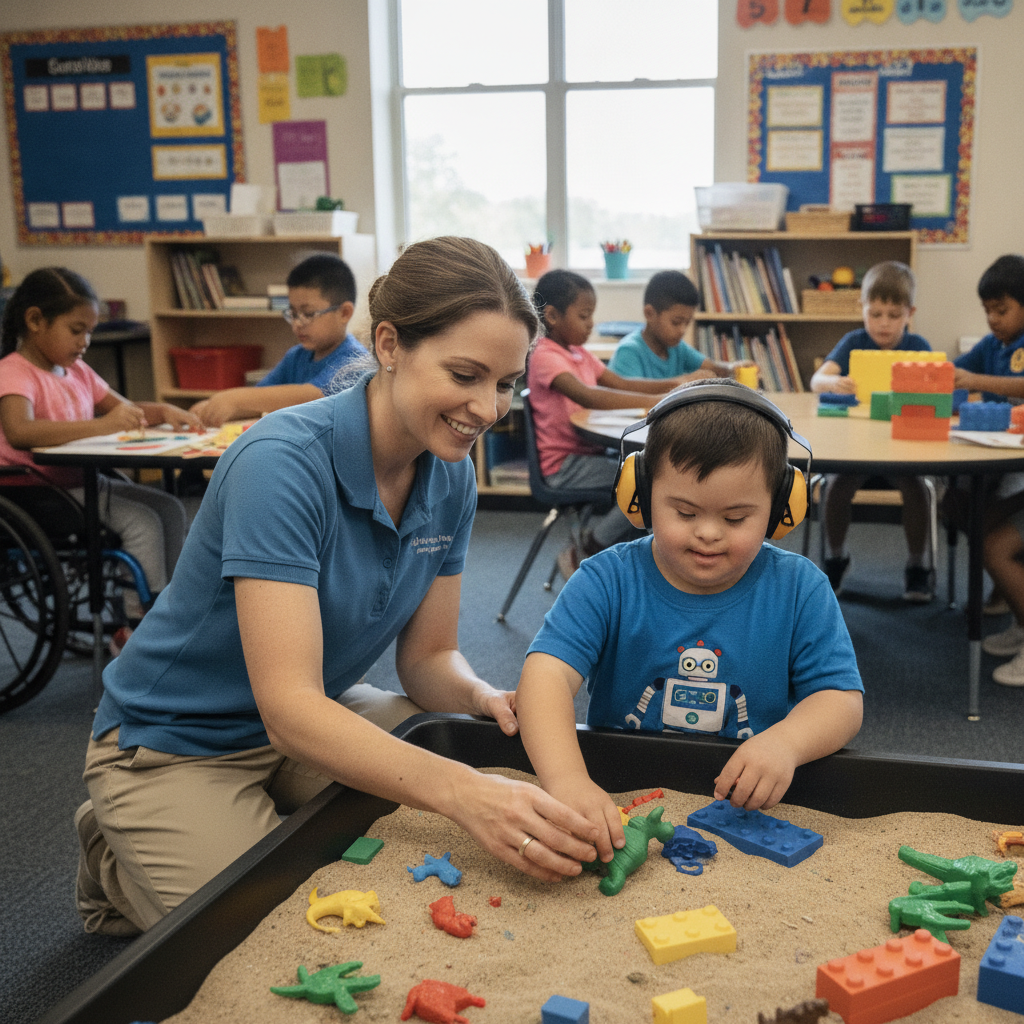
School can ask students to manage many tasks at once: listen to instruction, write, use classroom tools, move safely, follow routines, communicate, and work with peers. When developmental needs make those tasks difficult, occupational therapy can help students participate more successfully and independently.
The role of an occupational therapist (OT) in special education is centered on access and participation. Rather than focusing only on a diagnosis or isolated skill, the OT examines what a student needs to do in the school environment and identifies practical supports that connect therapy to learning.
What Is Occupational Therapy in a School Setting?
School-based occupational therapy helps students participate in education, classroom routines, social activities, and school-related self-care. An OT may provide direct therapy, classroom support, consultation, adapted materials, or environmental changes as part of a student’s educational program.
School-based OT differs from private or clinical occupational therapy. A private OT may address broader health, developmental, or daily-living goals in a clinic or home setting. In schools, services must relate to the student’s ability to access instruction and make educational progress. A student may have a medical diagnosis and still not qualify for school-based OT if the condition does not affect educational participation.
For example, an OT might help a student stabilize paper while writing, use a visual schedule to follow a routine, select an accessible computer interface, or develop a plan for managing noise during group instruction. The purpose is functional: improving the student’s ability to take part in meaningful school occupations.
Occupational therapy can support:
- Classroom participation and engagement
- Independence with school activities of daily living (ADLs), such as dressing for outdoor play or managing lunch containers
- Access to written, digital, and hands-on instruction
- Safe movement and use of classroom materials
- Self-regulation and participation in social routines
Students Who May Benefit From Occupational Therapy
Students may benefit from occupational therapy when physical, sensory, motor, communication, or learning-related needs interfere with school participation. An OT evaluation determines whether occupational therapy is educationally relevant; a diagnosis alone does not automatically create eligibility.
Students considered for school-based OT may experience challenges related to developmental coordination disorder, autism, cerebral palsy, developmental delays, attention differences, intellectual disabilities, acquired brain injury, or other developmental needs. Some students have no formal diagnosis but show persistent difficulty completing classroom tasks.
Potential indicators include difficulty:
- Using pencils, scissors, glue, utensils, keyboards, or other tools
- Copying from a board, organizing written work, or producing legible handwriting
- Managing clothing fasteners, toileting routines, lunch items, or personal belongings
- Remaining engaged when the classroom is noisy, crowded, or visually busy
- Coordinating both sides of the body during sports, crafts, or playground activities
- Following multistep routines or shifting between activities
- Communicating needs through speech, gestures, pictures, or assistive technology
These behaviors can have many causes. Fatigue, language demands, unclear instructions, anxiety, vision or hearing differences, and classroom design may contribute. That is why an OT considers the student, task, and environment together instead of assuming the difficulty reflects a fixed personal deficit.
Skills and Challenges Occupational Therapists Address
Occupational therapists address skills that affect classroom participation, independence, and access to instruction, including fine motor control, handwriting, sensory processing, attention, coordination, regulation, and school-based self-care.
Fine motor skills and handwriting
Fine motor skills involve the small-muscle movements needed for writing, cutting, opening containers, manipulating objects, and using technology. An OT may assess grasp, hand strength, bilateral coordination, posture, visual-motor integration, and the demands of the writing task. Support could include pencil adaptations, a sloped writing surface, reduced copying, keyboarding, or explicit instruction in letter formation.
Handwriting is only one possible access method. If handwriting consumes so much effort that a student cannot demonstrate knowledge, the team may consider speech-to-text, typing, alternative response formats, or shortened written output. Choosing technology can increase access, although it may require instruction, device maintenance, and consistent use across settings.
Sensory processing, attention, and regulation
Sensory processing describes how a person notices and responds to information such as sound, touch, movement, light, and body position. An OT may help identify environmental triggers and design supports, such as a quieter workspace, predictable transitions, movement opportunities, visual information, or access to noise-reducing headphones when appropriate.
These strategies should serve a clear participation goal. A sensory tool is not automatically helpful simply because it is popular. The team should observe whether the support improves attention, task completion, communication, or comfort without isolating the student or reducing instruction time.
Motor coordination, routines, and independence
OTs can address motor planning, balance, posture, coordination, and the sequence of actions needed for classroom routines. They may break a task into steps, teach a consistent routine, adapt materials, or practice activities of daily living that occur at school. Progress is often measured through functional outcomes, such as completing a locker routine with fewer prompts or joining a group activity for a longer period.

How Occupational Therapy Supports the IEP
Occupational therapy supports an Individualized Education Program (IEP) by contributing evaluation data, measurable goals, accommodations, service recommendations, and progress updates tied to educational participation.
The process commonly includes these steps:
- Referral and evaluation: The school team gathers information from family members, teachers, observations, work samples, and standardized or functional assessments. The OT examines how the student performs real school tasks.
- Goal development: The IEP team identifies a meaningful educational need and writes a measurable goal. A goal might address completing a written assignment with an appropriate access method, managing materials independently, or transitioning between activities with fewer adult prompts.
- Service planning: The team decides whether the student needs direct OT, small-group instruction, consultation, classroom-based support, or a combination. Frequency and duration should reflect the student’s needs and the educational setting.
- Accommodations and modifications: Supports may include adapted seating, visual schedules, alternative response methods, extra time, simplified materials, or changes to the physical environment.
- Progress monitoring: The team reviews data such as prompt levels, task completion, work quality, participation duration, and independence. Services can be adjusted when a strategy is ineffective or the student’s needs change.
OT input is one part of collaborative IEP decision-making. The OT does not independently determine eligibility, placement, or every classroom support. Those decisions belong to the appropriate educational team under applicable local and national requirements. Families can review the U.S. Department of Education’s IDEA resources for general information about special education processes in the United States.
Common School-Based OT Interventions
Common school-based OT interventions modify tasks, tools, instruction, or environments so students can participate more effectively. Services may occur in the classroom, therapy space, playground, cafeteria, or another setting connected to the IEP goal.
- Classroom strategies: Visual schedules, first-then language, task checklists, structured workspaces, transition warnings, and planned movement breaks.
- Adapted materials: Pencil grips, specialized scissors, larger paper, non-slip surfaces, slant boards, adapted utensils, page markers, or simplified fasteners.
- Assistive technology: Keyboards, tablets, speech-to-text, text-to-speech, alternative mice, communication systems, and software that supports written expression or organization.
- Task modification: Dividing assignments into smaller steps, reducing unnecessary copying, changing the response format, or teaching a more efficient method.
- Environmental supports: Adjusting seating, lighting, noise, desk layout, access routes, or the location of materials.
- Direct or consultative services: The OT may teach a skill directly, coach staff during classroom activities, or monitor a strategy implemented by the teacher.
A practical decision rule is to ask three questions: What participation barrier is occurring? What change could reduce that barrier? How will the team know the change worked? This keeps intervention connected to learning rather than turning therapy into a collection of disconnected exercises.
Collaboration Among OTs, Teachers, Families, and Students
Collaboration improves occupational therapy when OTs, special educators, general educators, families, and students use consistent strategies across meaningful routines. Shared planning also prevents a support from working in therapy but failing during actual instruction.
Teachers provide information about curriculum demands, classroom timing, peer interactions, and task expectations. Families explain routines, strengths, preferences, cultural considerations, and strategies that work at home. Students should have a voice in choosing tools and identifying what helps them feel capable and included.
For example, if a student struggles to begin independent work, the OT and teacher might create a three-step visual checklist, place materials in a predictable location, and track the number of prompts needed. The family can use a similar checklist for homework or morning preparation if the student finds it useful. The goal is consistency without forcing school strategies into every home routine.
Communication does not need to be complicated. A brief shared note can record the strategy used, the student’s response, and any adjustment needed. Teams should also consider student dignity. Supports should be age-respectful, discreet when possible, and presented as tools for access rather than evidence that the student is incapable.
When to Seek an Occupational Therapy Evaluation
Consider discussing an occupational therapy evaluation when persistent difficulties with motor skills, sensory processing, self-care, regulation, or classroom participation interfere with learning or independence. Screening can identify concerns, while a full evaluation examines performance and helps determine appropriate services; neither process alone provides a universal diagnosis.
Parents and educators may begin with the student’s teacher, special education coordinator, school psychologist, pediatrician, or another relevant professional. Useful information includes:
- Which tasks are difficult and how often the difficulty occurs
- What happens immediately before and after the challenge
- Which supports have already been tried
- Whether the concern appears at school, home, or both
- How the difficulty affects participation, safety, communication, or independence
Seek prompt professional guidance for sudden changes in movement, strength, coordination, behavior, or self-care. School-based OT is limited to educational needs, while a private evaluation may address broader functional concerns. Families may need both types of support, but one does not replace the other.
Frequently Asked Questions
What does an occupational therapist do in special education?
An occupational therapist helps students access instruction and participate in school routines. The OT may address fine motor skills, sensory processing, self-care, coordination, regulation, assistive technology, and environmental or task adaptations.
How does a student qualify for school-based occupational therapy?
Eligibility depends on an evaluation and the rules of the relevant education system. The team considers whether an occupational performance need affects educational access or progress. A diagnosis by itself does not guarantee school-based OT.
Is occupational therapy included in an IEP?
It can be included when the IEP team determines that OT is necessary for the student to benefit from special education. The IEP should describe relevant goals, services, accommodations, and progress-monitoring methods.
What is the difference between school-based and private occupational therapy?
School-based OT focuses on educational participation and school routines. Private OT may address wider health, developmental, home, community, or daily-living goals. Their assessments and recommendations can complement each other.
How can parents support OT goals at home?
Ask the school team for the functional goal and the strategy being used, then practice it naturally during an everyday routine if the student agrees. Keep practice brief, avoid turning home into a second therapy clinic, and share observations with the team.
Occupational therapy is most effective in special education when it connects a student’s strengths and needs to real activities: learning, communicating, moving, creating, managing routines, and belonging in the classroom. Thoughtful assessment and coordinated support can remove barriers while preserving the student’s choice, dignity, and growing independence.