Social Skills Development for Children on the Autism Spectrum: Practical, Individualized Support

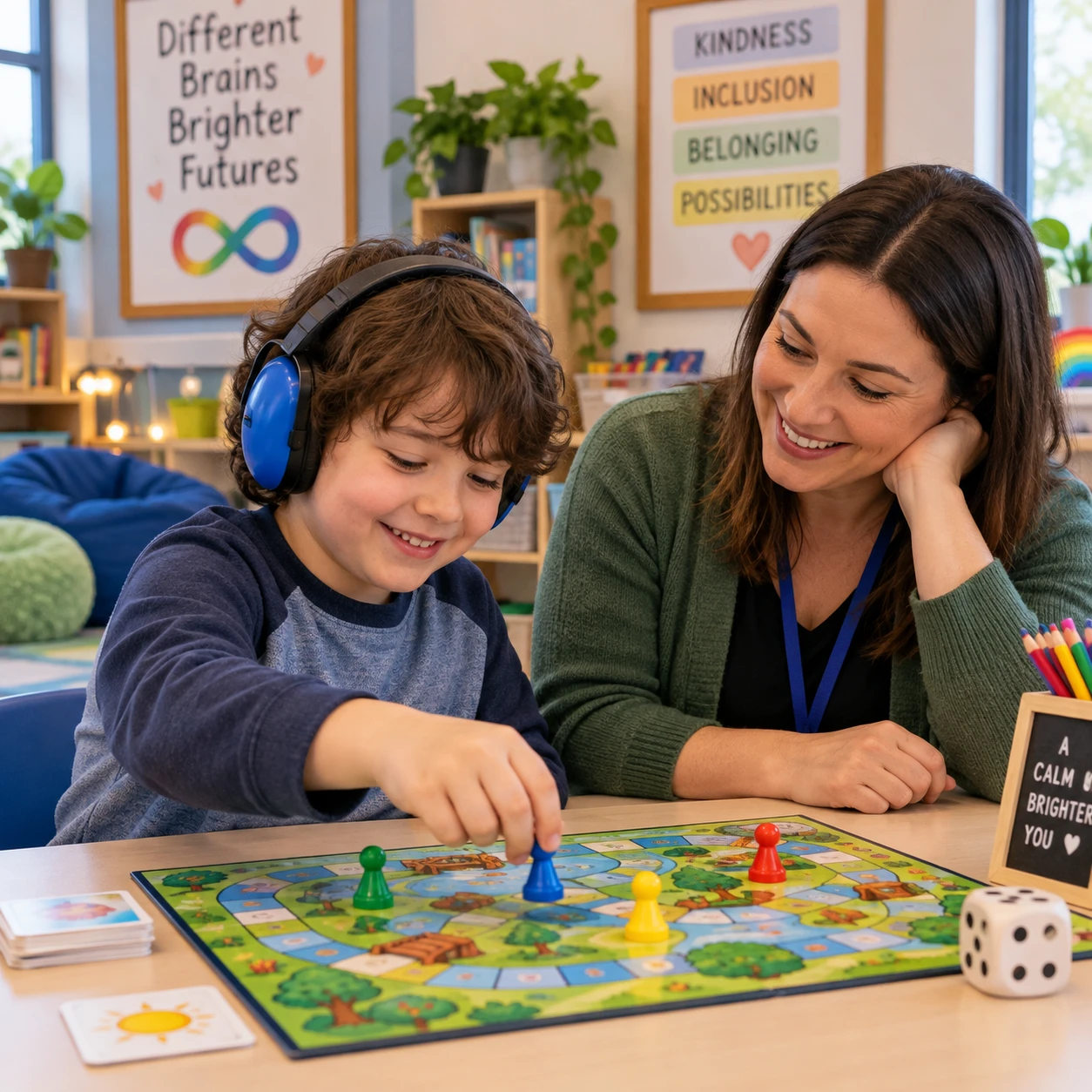
Social skills development for children on the autism spectrum works best when it supports communication, connection, and comfort rather than asking a child to copy one expected way of interacting. A child may want friends but find group conversations tiring, or prefer sharing an interest to making small talk. Those differences matter when choosing what to practice.
Families and educators can begin with everyday moments: asking for help, taking turns in a favorite game, or letting someone know when a break is needed. The goal is to build skills that serve the child’s own life, with respect for their communication style and autonomy.
What Social Skills Development Can Mean
Social skills development means supporting the ways a child communicates, connects, and manages interactions in situations that matter to them. It should reflect the child’s strengths, needs, preferences, and communication style, not a fixed standard of sociability.
Social communication can include speaking, using gestures, writing, communication devices, or combining several methods. Social interaction may mean talking with a classmate, playing alongside another child, sharing an interest, or choosing to spend time alone. None of these forms of connection is automatically better than another.
Autistic children vary widely. One child may need help entering a group activity; another may want tools for ending a conversation or handling an unexpected change. Some communicate clearly but need extra time to process what others say. Support is most useful when it reduces barriers and helps the child express themselves, rather than treating autism as something to cure.
It also helps to distinguish a skill gap from an environmental mismatch. A noisy lunchroom, unclear rules, or a fast-moving conversation can make interaction difficult even when a child understands what they want to do. Adjusting the setting may be as important as practicing a skill.
Skills to Support in Everyday Situations
Useful social skills are practical abilities that help a child communicate choices, navigate shared activities, and feel safer with other people. Which ones to support depends on the child’s daily routines, relationships, and own priorities.
Possible areas for practice include:
- Turn-taking: waiting, signaling a turn, or agreeing on how long each person has with a shared toy or game.
- Expressing preferences: saying, signing, or indicating “I like this,” “no thank you,” or “I need a break.”
- Recognizing boundaries: asking before touching someone’s belongings, and understanding that the child can also say no to touch or interaction.
- Navigating group activities: finding a role, asking what to do next, or choosing to watch before joining in.
- Emotional regulation: noticing signs of overwhelm and using a trusted strategy, such as quiet time, movement, or a communication card.
- Perspective-taking: considering what another person may know, feel, or prefer, while recognizing that guesses can be wrong and it is okay to ask.
These skills should not become tests of politeness or performance. Eye contact, for example, is not a requirement for listening or showing interest. A child may attend better while looking away, moving, or focusing on a familiar object.
Start With the Child’s Strengths and Goals
Choose individualized goals by identifying a real situation the child wants or needs to navigate, then agreeing on a small, observable skill with the child, family, and educators. A useful goal improves access, agency, or comfort in daily life.
Start by noticing what already works. Perhaps the child shares ideas confidently with a sibling, enjoys structured games, or uses a tablet to communicate needs. These strengths can provide a natural starting point for practicing in new settings.
Next, ask what the child wants to change. A goal might be “I can tell my partner when I want to pause a game,” rather than “I will play with classmates for 20 minutes.” The first teaches self-advocacy and can be measured without assuming that longer socializing is always better.
Keep goals specific and flexible. A family and teacher might agree to practice one way of requesting a turn during a preferred classroom activity, then review whether it felt useful. Include the child’s preferred communication method, necessary supports, and a way to say the goal is uncomfortable or no longer relevant. Progress can mean needing less help, feeling more at ease, or communicating a boundary clearly.
Practical Ways to Build Skills
To build a social skill, model it, practice it in a low-pressure way, and use it in a familiar real-life situation. Visual supports and social narratives can make expectations easier to understand, but they should offer options rather than scripts the child must follow exactly.
Model and role-play in brief, low-stakes practice
Show the skill during an activity the child enjoys. An adult might say, “I’m using the blue marker. Would you like it when I’m done?” Then invite the child to try, adapt the words, or use another communication method. Keep role-play short; stop if it becomes frustrating or feels like a performance.
Use visual supports and social narratives
A visual schedule, simple choice board, or “first, then” card can clarify what is happening and what choices are available. A social narrative can describe a specific event, such as joining a library group or asking to leave a noisy room. Include the child’s perspective, likely changes, and ways to request support. Revisit it together, since real situations rarely follow a script exactly.
Practice first in a comfortable setting, then try the skill where it is needed with a trusted person nearby. For example, rehearse asking for a break at home before using the same signal during a school club. A familiar setting lowers pressure, though it may not capture every challenge of a new place.

Supporting Social Interaction at Home and School
Families and educators support social interaction by creating welcoming opportunities, making expectations clear, and coordinating strategies across settings. Consistency helps, but support should still adapt to the child and the situation.
At home, caregivers can build practice into ordinary routines: choosing a family game, taking turns preparing a snack, or planning how to greet a relative. Offer an authentic choice about whether to join. A child who declines may be communicating a need for rest, not rejecting the family.
At school, educators can make peer relationships easier to develop by pairing children around a shared interest, offering clear roles in group work, and allowing different ways to participate. A student might contribute by speaking, drawing, arranging materials, or using an AAC device. Adults can also explain boundaries to peers and intervene when teasing or exclusion occurs.
For collaboration, families and school staff can share a brief plan covering:
- the skill the child has chosen to practice;
- the child’s preferred communication and any visual supports;
- what helps when the child feels overwhelmed;
- how adults will notice progress and ask for the child’s feedback.
Regular check-ins prevent a strategy from becoming a rigid rule. If a support helps at home but not at school, look at differences in noise, pace, group size, or adult prompts before assuming the child has lost the skill.
Progress, Flexibility, and Well-Being
Meaningful progress is any change that helps a child communicate, connect, or feel more in control in a situation they care about. It may look like asking for clarification, choosing a preferred peer activity, or leaving a stressful interaction safely.
Track outcomes that matter to the child, not just visible behaviors. A simple record can note the situation, the support offered, the child’s response, and whether the experience felt comfortable. Review patterns every few weeks with the child and the adults involved; adjust the goal if the setting or the child’s priorities change.
Avoid pressuring a child to mask autistic traits, imitate neurotypical behavior, or socialize when they need recovery time. Forced eye contact or rehearsed responses can hide distress without making interaction easier. Skills should support consent, self-advocacy, emotional regulation, and genuine peer relationships. If a strategy increases anxiety, pause and consider a different approach or consult a qualified professional who understands autism and the child’s communication needs.
The most useful measure is not how closely a child matches one social norm. It is whether the child has more ways to express themselves, participate by choice, and build relationships on terms that feel safe and meaningful to them.