Sensory Processing Disorder: Signs, Strategies, and Support

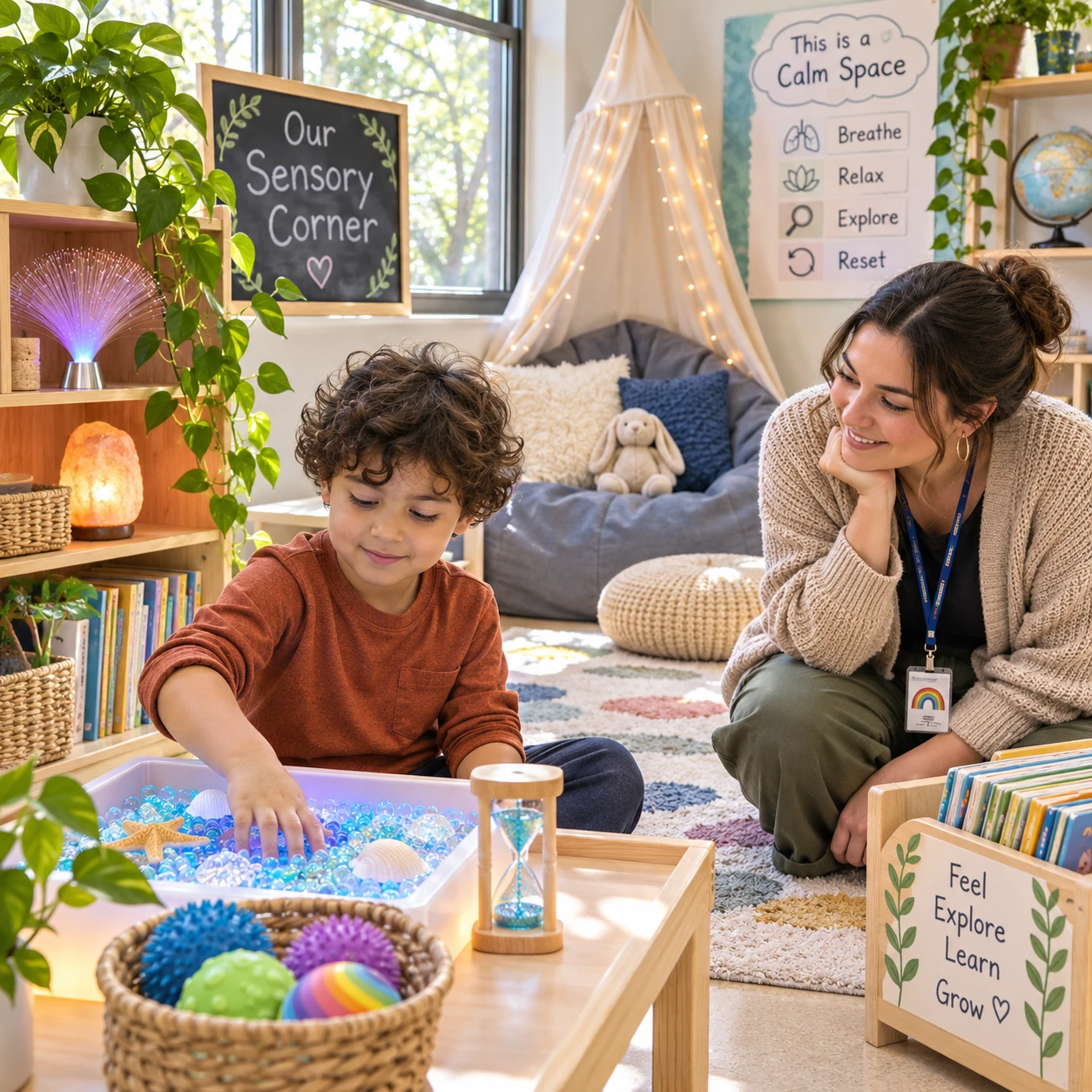
Children take in information through their senses all day: the scrape of a chair, a bright classroom, a food’s texture, or the feeling of moving through a crowded hallway. For some children, these sensations feel unusually intense, hard to notice, or difficult to manage. Understanding sensory processing can help families and educators respond with practical support rather than blame.
What sensory processing means
Sensory processing is the way the nervous system notices, organizes, and responds to information from the body and surroundings. When sensory experiences are challenging, a child may react strongly to some input, seek more of it, or have trouble deciding what to pay attention to.
Sensory information comes from familiar senses such as hearing, sight, taste, smell, and touch. It also includes balance and movement, body position, and internal signals such as hunger or the need for a break. A child might, for example, find a hand dryer painful while barely noticing a quiet instruction.
The term sensory processing disorder (SPD) is used to describe persistent difficulties with processing sensory input. However, sensory differences can occur for many reasons and alongside various developmental conditions; one behavior alone does not establish a diagnosis. Children also differ in how they respond, and their needs can change with fatigue, stress, health, or the setting.
Common signs of sensory processing difficulties
Common signs of sensory processing difficulties include strong reactions to certain sensations, frequent sensory seeking, or reduced awareness of sensory information. These patterns matter most when they happen repeatedly and interfere with comfort, routines, learning, or participation.
A child who is sensory avoiding may try to reduce or escape sensations that feel overwhelming. A child who is sensory seeking may look for more movement, pressure, sound, or touch. Some children show both patterns, depending on the sensation and situation.
- Sound: Covering ears, becoming distressed in noisy spaces, or missing spoken directions when there is background noise.
- Touch and clothing: Avoiding haircuts, seams, messy play, or unexpected touch; alternatively, touching objects and people often.
- Food and textures: Accepting a narrow range of foods, reacting to smells or textures, or seeking strong flavors. These patterns can have many causes and deserve a nonjudgmental response.
- Movement and balance: Seeking to spin, jump, or climb, or avoiding swings, stairs, and activities where the feet leave the ground.
- Body awareness: Using too much or too little force, bumping into objects, or seeming not to notice minor discomfort.
- Sight and attention: Struggling in bright, visually busy places or finding it hard to focus when many things are happening at once.
These are examples, not a checklist for diagnosis. A child’s response may also reflect pain, anxiety, communication differences, tiredness, or another factor. Look for patterns over time and ask what the child experiences, where possible.
How sensory needs can affect school and daily life
Sensory needs can affect a child’s comfort, attention, routines, and participation, but the impact varies by child and setting. A crowded lunchroom may be manageable for one student and exhausting for another.
At school, background noise can make instructions harder to follow, while fluorescent lighting or a busy wall display may compete for attention. Movement breaks, assemblies, art materials, sports, and transitions between classrooms can each bring different sensory demands. A child who leaves a group or refuses an activity may be trying to manage discomfort rather than being uncooperative.
At home, sensory challenges may show up during dressing, bathing, meals, bedtime, or errands. A routine that looks simple to an adult can involve many sensations and transitions for a child. If these experiences repeatedly lead to distress, missed activities, conflict, or exhaustion, the child and family may need adjustments and additional support.
It helps to separate the behavior you can see from the possible need behind it. Record what happened before, during, and after a difficult moment. This does not prove a cause, but it can reveal useful patterns, such as distress in loud spaces or greater flexibility after a quiet transition.
Practical strategies at home and school
To support a child’s sensory needs, observe what is difficult, make a small adjustment, and check whether it improves comfort or participation. Strategies should be individualized, safe, and reviewed with the child rather than applied as a fixed sensory program.
- Prepare for predictable challenges. Give a simple warning before transitions, explain what a noisy event will be like, and agree on a way to ask for a break.
- Adjust the sensory environment. Reduce unnecessary background noise or visual clutter, offer a quieter place to work, or let the child choose comfortable clothing when possible. A change that helps during homework may not be suitable during a group activity.
- Offer choices. Let the child select between two acceptable options, such as a different seat or a tool for messy art. Choices can increase a sense of control without requiring the child to avoid every challenging experience.
- Plan movement and pauses. Some children focus better after a brief walk, stretch, or classroom job. Keep the activity appropriate and watch how the child responds; more movement is not automatically helpful for everyone.
- Make routines manageable. Break a task into smaller steps, allow extra time for dressing or meals, and introduce unfamiliar textures gradually without pressure.
- Agree on a communication signal. A word, card, or gesture can help the child tell an adult that a space feels too loud or that they need a pause.
Keep brief notes on the situation, the adjustment, and the result. If a strategy increases distress or limits participation, stop and reconsider it. Sensory supports are tools to test, not a guarantee of a particular outcome.
Working with educators and professionals
Families can work with educators and qualified professionals to understand sensory concerns and choose appropriate support. Share specific examples, discuss how they affect daily life, and agree on practical steps that can be used consistently across settings.
When speaking with a teacher, describe the context rather than relying only on labels: “The cafeteria noise makes it hard for Maya to stay for lunch” gives the team something concrete to investigate. Ask what staff observe, which activities are most difficult, and what adjustments are possible within the classroom and school routines.
An occupational therapist (OT) may assess how sensory experiences relate to everyday activities, such as dressing, play, school tasks, and self-care. Depending on the child’s needs and local services, an OT may suggest environmental changes, skill-building activities, or ways to adapt routines. Support should be based on an individual assessment; no single sensory strategy suits every child.
Consider seeking professional guidance when sensory-related distress is persistent, affects safety or well-being, limits participation, or makes everyday routines difficult for the child or family. A pediatrician or other qualified health professional can help discuss possible causes and appropriate next steps. Families may also ask the school about its process for reviewing educational needs and supports.
For general information on occupational therapy’s role in supporting participation in daily activities, consult the American Occupational Therapy Association. Professional advice should be tailored to the child rather than used as a substitute for an individual evaluation.
Supporting the child with respect and consistency
Respectful, consistent support starts with believing a child’s experience and treating sensory differences as information, not misbehavior. Adults can set reasonable expectations while making room for safe ways to communicate discomfort and ask for help.
Use neutral language: “The room seems loud; would a quieter spot help?” is more useful than “You’re being difficult.” Avoid forcing a child into a sensation to make them “get used to it,” and do not assume that a strategy that worked yesterday will work in every situation. Pressure can increase distress and damage trust.
Family–school collaboration works best when adults share observations, agree on a few manageable strategies, and check in about their effects. Include the child in these conversations in a way that fits their age and communication style. As routines, skills, and environments change, support may need to change too.
Frequently asked questions
What are common signs of sensory processing difficulties? Signs may include strong reactions to sound, touch, movement, light, or food textures; seeking extra sensory input; or seeming less aware of sensations. These signs do not diagnose SPD by themselves.
How can sensory needs affect a child at school? Noise, lighting, transitions, and crowded spaces can affect comfort, attention, and participation. The impact differs from child to child.
What strategies can families and educators try? They can prepare for transitions, adjust the environment, offer appropriate choices and breaks, and track which changes help the child participate.
When should a family seek professional guidance? Talk with a qualified health professional when concerns persist or affect a child’s safety, well-being, daily routines, or access to learning and activities.