Individualized Education Programs (IEPs): A Step-by-Step Guide for Parents

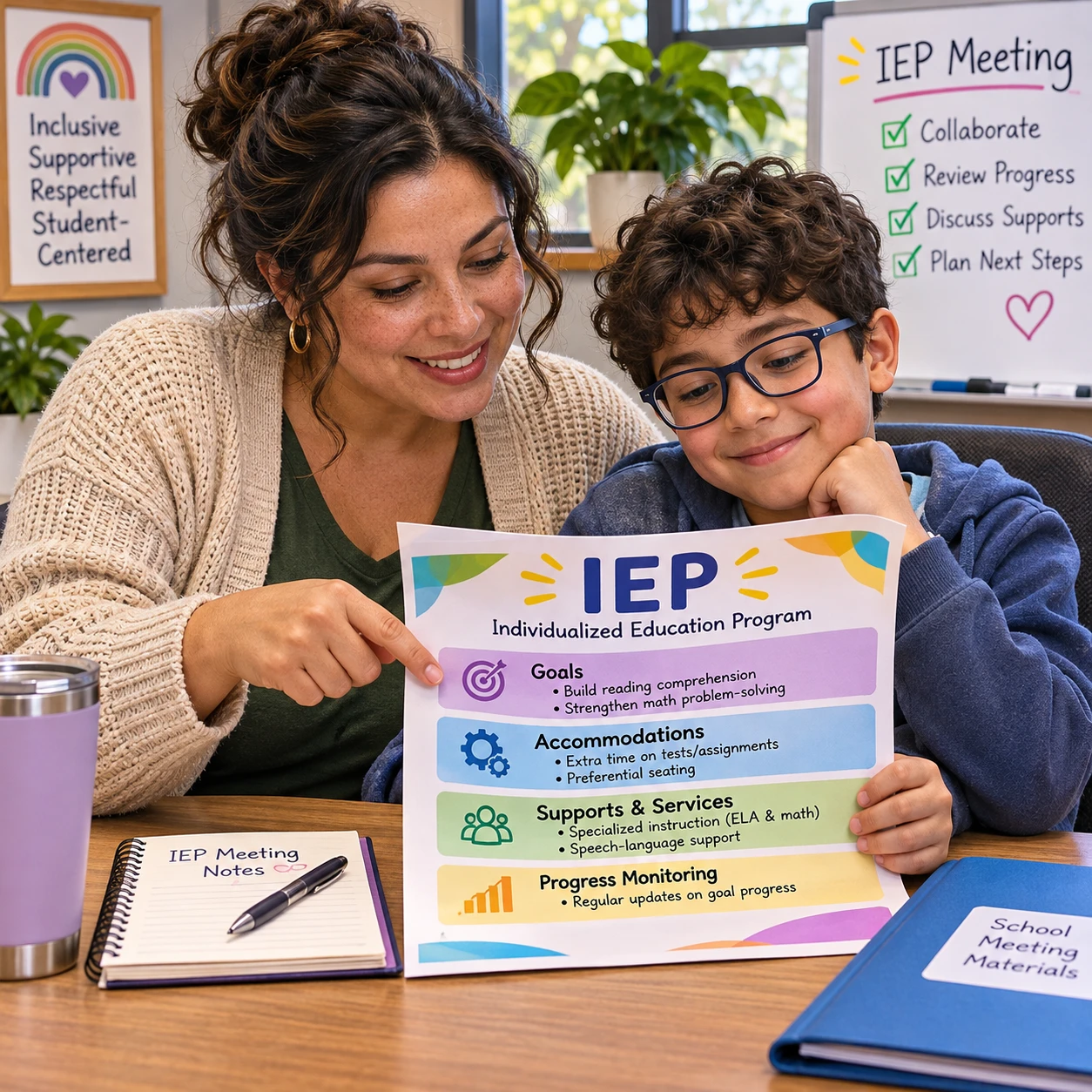
When your child needs support at school, unfamiliar terms and meetings can make the next steps feel unclear. An Individualized Education Program (IEP) gives eligible students with disabilities a written plan for special education and related supports. Parents and guardians are essential members of the team that develops and reviews it.
This guide explains the process from the first evaluation request through progress monitoring. Rules and timelines can vary by location, so use your local education agency’s guidance for procedures and rights.
What an IEP is—and who it is for
An Individualized Education Program (IEP) is a written plan for a student who qualifies for special education under applicable rules. It describes the student’s needs, annual goals, services, accommodations, and how the school will report progress.
An IEP is different from general classroom support. A teacher may adjust instruction or offer informal help to many students, but an IEP documents specially designed instruction and other required supports for a student found eligible. It is individualized: two students with the same diagnosis may need different plans.
A disability or learning difficulty alone does not automatically mean a child qualifies. The evaluation team considers whether the student meets the criteria used in the relevant jurisdiction and whether the disability affects educational performance so that the student needs special education. A medical diagnosis can provide useful information, but the school’s eligibility decision follows education rules.
The IEP team generally includes the parent or guardian, a general education teacher, a special education teacher or provider, a school representative familiar with available resources, and people who can explain evaluation results. The student may also participate, depending on age, needs, and local practice. The plan should account for strengths as well as support needs.
Step 1 — Request an evaluation and understand the process
To begin an IEP evaluation, contact your child’s school or district in writing and explain the concerns you want assessed. A written request creates a clear record, but you can also ask the school how to submit its required forms.
Describe what you observe rather than trying to diagnose the cause. For example: “My child reads familiar words but struggles to understand short passages and becomes upset during homework. Please evaluate reading and related learning needs.” Include when the difficulty began and any effect you have noticed at school or at home.
An evaluation may examine areas such as academic skills, communication, behavior, attention, physical or sensory needs, and social or emotional development. The areas assessed should relate to the concerns raised; the process is not necessarily one test. The school should explain consent, evaluation steps, and applicable timelines before proceeding.
Keep relevant records in one folder or digital file:
- Report cards, work samples, and teacher messages
- Attendance information and notes about patterns you observe
- Existing medical, developmental, or outside assessment reports, if relevant
- A dated copy of your request and the school’s responses
Share what you know, but do not feel you must arrive with a complete explanation. The purpose of an evaluation is to gather information systematically. For an overview of U.S. special education protections, see the U.S. Department of Education’s IDEA resources; confirm current requirements with your local school system.
Step 2 — Review evaluation results and eligibility
Reviewing evaluation results means understanding what each assessment found and how the team reached its eligibility decision. Ask for the reports in advance when possible so you have time to read them and prepare questions.
Look for plain-language explanations of your child’s performance, including strengths, areas of difficulty, and how the findings relate to learning and participation at school. If a report uses unfamiliar scores or terms, ask the evaluator to explain what they mean in everyday situations. A score should be interpreted alongside observations, work samples, and other relevant information, not in isolation.
Useful questions include:
- Which areas were assessed, and were any requested areas left out?
- What do the results suggest my child can do independently, and where is support needed?
- How do the findings affect classroom learning or access to instruction?
- Does my child meet the applicable eligibility criteria? If not, what support or next steps are available?
Eligibility is a team decision under local rules, and parents contribute information and ask questions throughout. If you disagree with a finding, explain the specific concern and ask about the process for discussing it, seeking clarification, or pursuing another evaluation. Procedures differ, so check local guidance before relying on a particular option or deadline.
Step 3 — Prepare for the IEP meeting
To prepare for an IEP meeting, gather relevant information, identify your priorities, and write down questions you want the team to answer. Preparation helps keep the conversation focused on your child’s daily experience and educational needs.
Ask who will attend and what the meeting will cover. You can bring notes, records, and a support person if local procedures allow. If you need an interpreter, accessible materials, or another adjustment to participate fully, request it ahead of time. You may also ask whether reports or a draft plan can be shared beforehand; practices vary by location.
Write a short picture of your child as a learner. Include interests, strengths, successful strategies, and situations that are difficult. A useful format is: “My child is successful when…; a challenge occurs when…; one change that may help is…” Specific examples are easier for the team to act on than broad statements such as “school is hard.”
Choose a few priorities for the meeting, such as communication, reading, transitions, or participation with classmates. You do not have to accept every proposal immediately if you need clarification. Ask the team to explain terms, summarize decisions, and note any follow-up tasks. A collaborative tone can make it easier to solve problems while still being clear about your concerns.
Step 4 — Review the plan’s key parts
A useful IEP connects the student’s present levels of performance to measurable annual goals, accommodations, services, and a plan for reporting progress. Review whether each part addresses a documented need.
Present levels of performance describe what your child can currently do and where support is needed. Look for specific information rather than general labels. For instance, “needs help with reading” offers less guidance than a description of the reading tasks the child can complete and where comprehension breaks down.
Measurable annual goals state what the student is expected to work toward during the plan period and how progress will be assessed. Ask how a goal will be measured, who will collect the information, and how often the team will review it. Goals should connect to present levels and address educational needs.
Accommodations and services explain supports such as changes to how instruction is presented, assistive tools, specialized teaching, or related services when appropriate. Clarify the details that affect day-to-day delivery: what support is provided, when or where it happens, and who is responsible. The plan should make the support understandable to the family and school staff.
Finally, check the progress-monitoring and reporting arrangements. Ask when you will receive updates and what the school will do if progress is limited. An IEP is a plan for instruction and support, not a guarantee of a particular outcome; clear measures make it easier to see whether the approach is helping and needs adjustment.
Step 5 — Follow progress and address concerns
Follow IEP progress by reviewing the school’s reports, comparing them with the goals, and communicating when something seems unclear or has changed. Progress monitoring helps the team decide whether supports are working as intended.
Keep a simple record of report dates, questions, and examples from home or school. If a goal appears stalled, ask how progress is measured and whether the current instruction or service is being delivered as written. A check-in can clarify a misunderstanding before it grows into a larger concern.
Contact the school if your child’s needs change, a support is not clear, or the plan no longer seems to match daily experience. You can request a discussion or ask about a review of the IEP. The team may consider updated information, changes in goals, or adjustments to services and accommodations, subject to local procedures.
If you disagree with a proposed decision, state what you disagree with and why, then ask the school to explain the options and relevant timelines. Keep communication factual and save copies of important messages. In the United States, IDEA includes procedural safeguards for eligible students and families; the details and available processes depend on the circumstances. Local parent centers or education agencies may explain them in accessible language.
Questions parents often ask about IEPs
Parents can ask for an evaluation, prepare information for a meeting, and raise questions about a proposed IEP. The exact process, timelines, and rights depend on where the student attends school.
How do I request an evaluation for my child?
Write to the school or district, describe your concerns, and ask for an evaluation to determine whether your child may need special education. Keep a copy and ask what consent forms and next steps apply. If you are unsure whom to contact, start with the principal, special education coordinator, or district office.
What should I bring to an IEP meeting?
Bring your questions, notes on your child’s strengths and needs, relevant schoolwork or records, and any outside reports you want the team to consider. A short list of priorities is often more useful than a large, unorganized file. Ask in advance whether you may bring a support person.
Can parents ask for changes to an IEP?
Yes. Parents can raise concerns and ask the IEP team to discuss changes or review the plan when needs or circumstances shift. Explain what is happening, give examples, and ask how the team will decide whether an adjustment is appropriate.
What can I do if I disagree with the proposed plan?
Ask the team to explain the reasoning, identify the parts you disagree with, and request information about local options and deadlines. You can ask for clarification or a follow-up meeting. Because formal procedures differ, consult your local education agency or a qualified parent-support organization for guidance specific to your situation.
Parents do not need to know every technical term to contribute meaningfully. Clear questions, specific observations, and regular follow-up help the IEP team build a plan that reflects the student’s strengths and support needs.