Early Intervention Strategies for Children with Developmental Delays

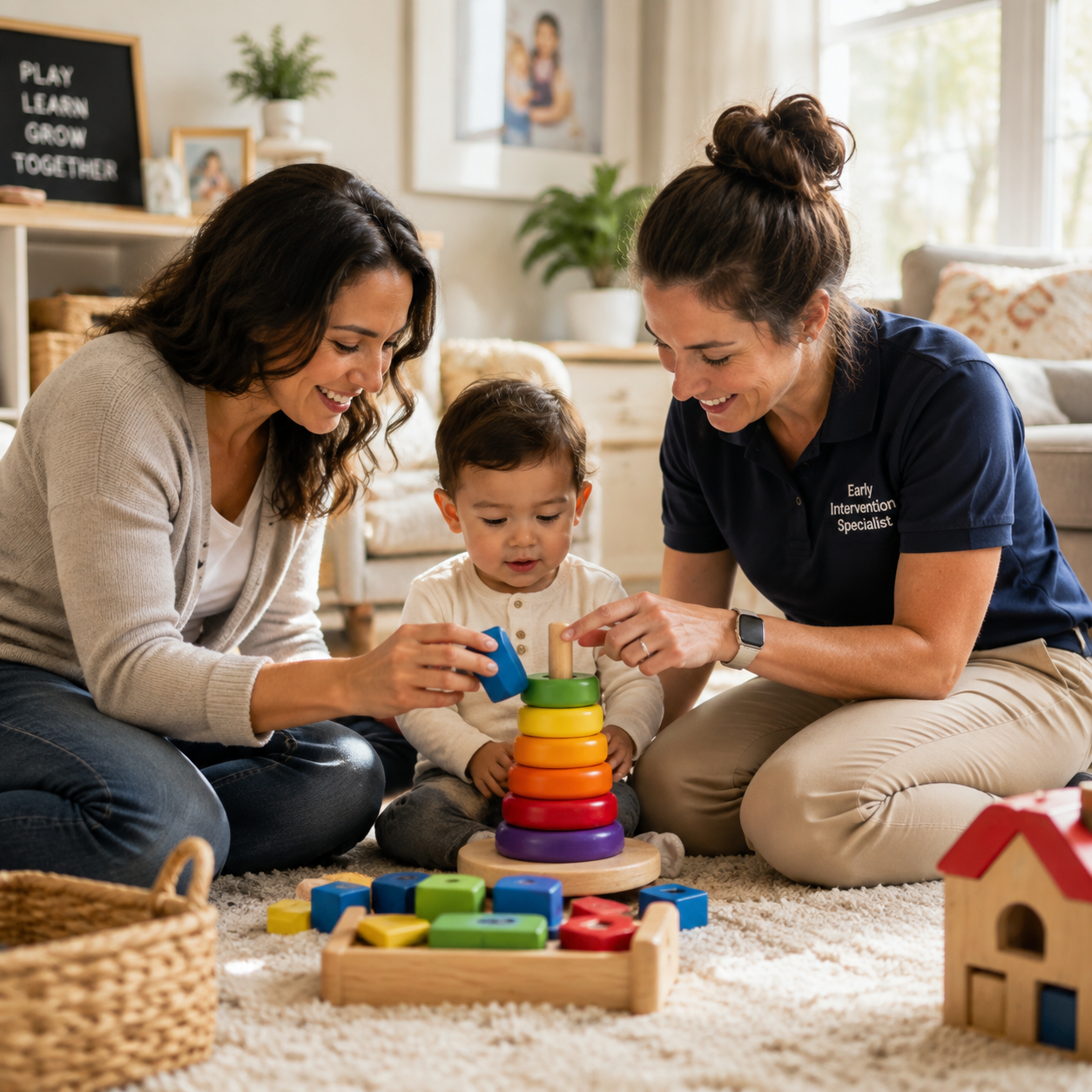
Early intervention gives children with developmental delays timely, individualized support while helping families understand what to do next. The most effective approach combines responsive relationships, playful practice, accessible routines, and collaboration with qualified professionals.
Understanding Developmental Delays and Early Intervention
Developmental delays occur when a child develops a skill later than expected in areas such as communication, movement, learning, social interaction, or self-care. Early intervention provides services and everyday strategies that build on the child’s strengths, interests, and current abilities.
Development does not follow one identical timetable. A child may communicate confidently through gestures while using few spoken words, or show strong problem-solving skills while finding balance and coordination difficult. These differences deserve careful observation rather than assumptions about what a child can or cannot learn.
Timely support can make practice more meaningful because young children learn through relationships, repetition, movement, and play. Early intervention does not promise to eliminate a delay. Instead, it helps children participate more fully in family life, early learning, and daily activities.
Services may include speech and language therapy, occupational therapy, physical therapy, developmental instruction, behavioral or psychological support, and hearing or vision assessment. A pediatrician, early intervention provider, or local education agency can explain which options fit the child’s age and needs. Families can also review developmental information from the CDC’s developmental monitoring resources.
Start with Developmental Screening and Individualized Goals
Developmental screening identifies areas that may need closer evaluation, while individualized goals turn assessment findings into practical next steps. Screening is not a diagnosis; a qualified professional must interpret concerns through a comprehensive evaluation.
Begin by recording specific observations. Note what the child does independently, what requires help, how the child communicates, which activities cause frustration, and what motivates participation. Examples are more useful than broad descriptions such as “struggles with language.”
A team may include a pediatrician, speech-language pathologist, occupational therapist, physical therapist, psychologist, special educator, or early intervention coordinator. Together, the team can identify measurable goals, such as using three functional communication methods during meals or walking five steps between stable surfaces.
For children who qualify for services under early intervention programs, goals are commonly documented in an Individualized Family Service Plan (IFSP). When a child transitions into school-based special education, an Individualized Education Program (IEP) may describe educational goals, accommodations, related services, and progress measures.
- Choose goals that improve participation, such as requesting help, joining circle time, or putting on a coat.
- Break each goal into small, observable steps.
- Decide how adults will measure progress and how often they will review it.
- Adjust the activity if the child shows fatigue, distress, sensory overload, or loss of interest.
The key question is practical: What support will help this child communicate, move, learn, or participate more independently?
Strategies to Support Communication and Language
To support communication and language, adults should respond to the child’s current communication, model useful words or symbols, and create frequent reasons to interact. Short, meaningful exchanges work better than repeated testing or demands to speak.
Follow the child’s attention during play. If the child pushes a toy car, say, “Car goes,” then pause and give time for a look, gesture, sound, sign, or word. Treat every intentional communication attempt as meaningful and respond consistently.
Practical communication supports
- Model without pressure: Use one or two words above the child’s current level. If the child says “juice,” you might say, “More juice.”
- Offer choices: Hold up two snacks or toys and wait for a reach, point, picture, sign, or word.
- Use visual supports: Pictures, object cues, first-then boards, and simple schedules can make expectations easier to understand.
- Build turn-taking: Roll a ball, copy sounds, or take turns adding blocks. Pause so the child has a clear opportunity to participate.
- Expand play language: Describe actions such as “open,” “pour,” “in,” “help,” and “finished” during real activities.
Speech and language therapy can address understanding, expression, speech sounds, social communication, or feeding-related communication needs. Some children benefit from assistive technology, including picture systems, speech-generating devices, or adapted access methods. Alternative communication does not prevent speech development; it can give a child a reliable way to express needs and ideas while spoken language develops or alongside it.
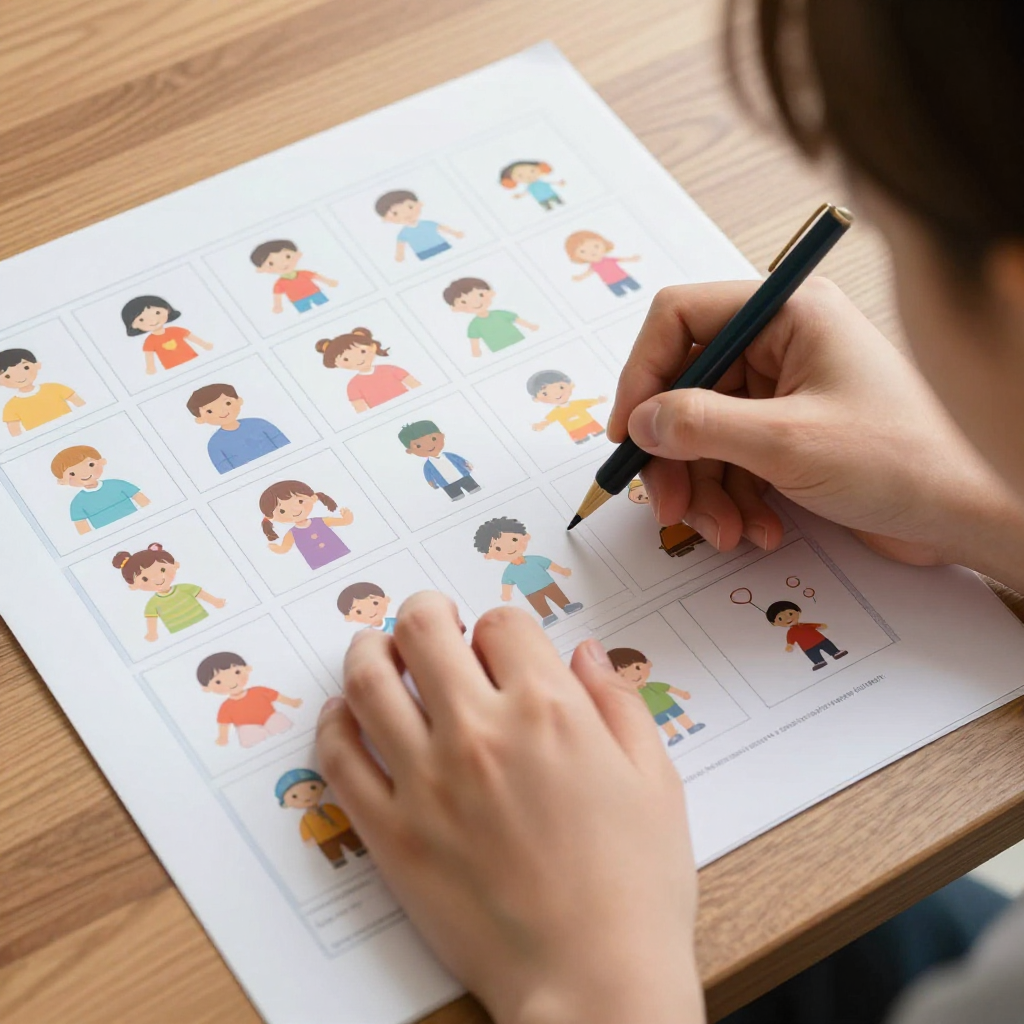
Strategies for Motor Skills and Daily Independence
To build motor skills and daily independence, embed safe, purposeful movement into routines and adapt tasks so the child can participate successfully. Physical therapy often targets large movements, while occupational therapy may address fine-motor control, sensory needs, play, and self-care.
For gross motor development, a physical therapist may recommend activities such as supported standing, reaching across the body, stepping over low objects, or moving between stable surfaces. Follow professional instructions closely, especially when balance, joint stability, muscle tone, or medical conditions affect movement.
Fine-motor practice can happen during ordinary play. Try placing large objects into containers, peeling stickers, turning thick pages, squeezing play dough, or using chunky crayons. Choose materials that match the child’s abilities and supervise small objects to reduce choking risks.
Make routines teachable
- Use a visual sequence for washing hands: turn on water, wet hands, add soap, scrub, rinse, dry.
- Offer adapted handles, stable seating, non-slip mats, or clothing with easier fasteners when recommended.
- Give the child one manageable step before adding another.
- Allow extra processing time rather than completing the task immediately.
- Celebrate effort and participation, not only a perfectly completed action.
Choosing an adaptation for independence may mean accepting a slower or less conventional method. That trade-off is often worthwhile when the child gains control, confidence, and a meaningful role in daily life.
Supporting Social-Emotional Development and Learning Through Play
Play-based learning supports social-emotional development by giving children repeated opportunities to communicate, take turns, solve problems, and manage feelings in a low-pressure setting. Predictable routines and calm adult responses make these learning opportunities easier to access.
Use familiar songs, simple games, and repeated story routines to establish a clear beginning, middle, and end. During turn-taking, say “my turn” and “your turn,” use a visual cue if helpful, and keep turns brief enough for success. Gradually increase the waiting time as the child becomes comfortable.
Emotional support starts with noticing signals. A child who covers their ears, leaves an activity, cries, or becomes unusually quiet may need a break, reduced noise, movement, or a clearer way to request help. Label emotions simply: “You look worried. Let’s take a break.” This acknowledges the experience without treating distress as deliberate misbehavior.
Peer interaction should be supported rather than forced. An educator might pair two children at a water table, assign complementary roles in a building activity, or provide duplicate materials to reduce conflict. Adults can model joining, sharing, repairing a mistake, and asking for a turn.
Learning activities should connect with the child’s interests. A child who loves vehicles can practice counting cars, requesting colors, following two-step directions, and comparing big and small. The same interest can support language, early mathematics, motor planning, and social participation.
How Families, Educators, and Specialists Can Work Together
Family-centered care works best when families and professionals share decisions, respect the child’s communication style, and use strategies that fit real routines. Consistency matters, but every adult does not need to use identical words or materials.
Start with a shared priorities list. Families may value mealtime participation, sleep routines, dressing, or communicating pain. Educators may focus on group participation and transitions. Therapists can connect these priorities to specific strategies and explain how to practice them safely.
- Use a notebook, secure app, or brief weekly message to share successful activities and emerging concerns.
- Describe the cue, the child’s response, and the amount of help required.
- Agree on a few common words, visual symbols, or prompts across settings.
- Share cultural routines, family preferences, sensory considerations, and accessibility needs.
- Schedule reviews before a problem becomes urgent.
Professionals should explain the purpose of an activity and invite caregiver feedback. Families should feel able to ask what evidence supports a recommendation, how progress will be measured, and what alternatives exist. A coordinated plan is more realistic when it fits the child’s home, childcare, classroom, and community environments.
Monitoring Progress and Adjusting Strategies
Monitor progress by tracking observable changes in participation, communication, movement, and independence, then adjust strategies when the child’s needs or responses change. Small gains, such as waiting two seconds for a turn or using a picture to request help, can show meaningful development.
Keep records simple. Once or twice a week, write down the activity, the support offered, the child’s response, and what happened next. For example: “During snack, Maya pointed to the apple picture twice with a verbal model and needed help opening the container.” This information helps the team decide whether to continue, simplify, or increase the challenge.
Look for patterns rather than judging a single difficult day. Sleep, illness, hunger, transitions, noise, and changes in routine can affect performance. Progress may also appear first in one setting before it transfers to another.
Seek another developmental evaluation when concerns increase, a child loses previously acquired skills, current goals remain unchanged despite consistent support, or new communication, movement, hearing, vision, behavioral, or sensory concerns emerge. Contact the child’s pediatrician or intervention coordinator promptly if there is a loss of skills or an urgent safety concern.
Early intervention is an ongoing process of observing, supporting, and adapting. With respectful goals, responsive relationships, and coordinated professional guidance, children can build practical skills in ways that honor who they are and how they learn.
Frequently Asked Questions About Early Intervention
What is early intervention for developmental delays?
Early intervention is a set of developmental services and everyday supports for young children who have delays or may be at risk for delays. It can address communication, movement, learning, social-emotional development, and daily living skills.
Which professionals provide early intervention services?
Services may involve speech-language pathologists, occupational therapists, physical therapists, special educators, psychologists, developmental specialists, pediatricians, and family service coordinators. The team depends on the child’s evaluation and priorities.
How can parents support early intervention at home?
Parents can support development through responsive play, predictable routines, choices, visual supports, shared reading, movement opportunities, and practice during self-care. Home activities should complement, not replace, professional evaluation and therapy.
How are early intervention goals created?
Goals are created from developmental evaluation results, family priorities, the child’s strengths, and observations across settings. Effective goals describe a functional action, the support needed, and how progress will be measured.
When should a child receive another developmental evaluation?
Request another evaluation when concerns persist, progress changes, new needs appear, or the child loses a skill. Families can begin with the pediatrician, early intervention provider, school team, or local child development service.